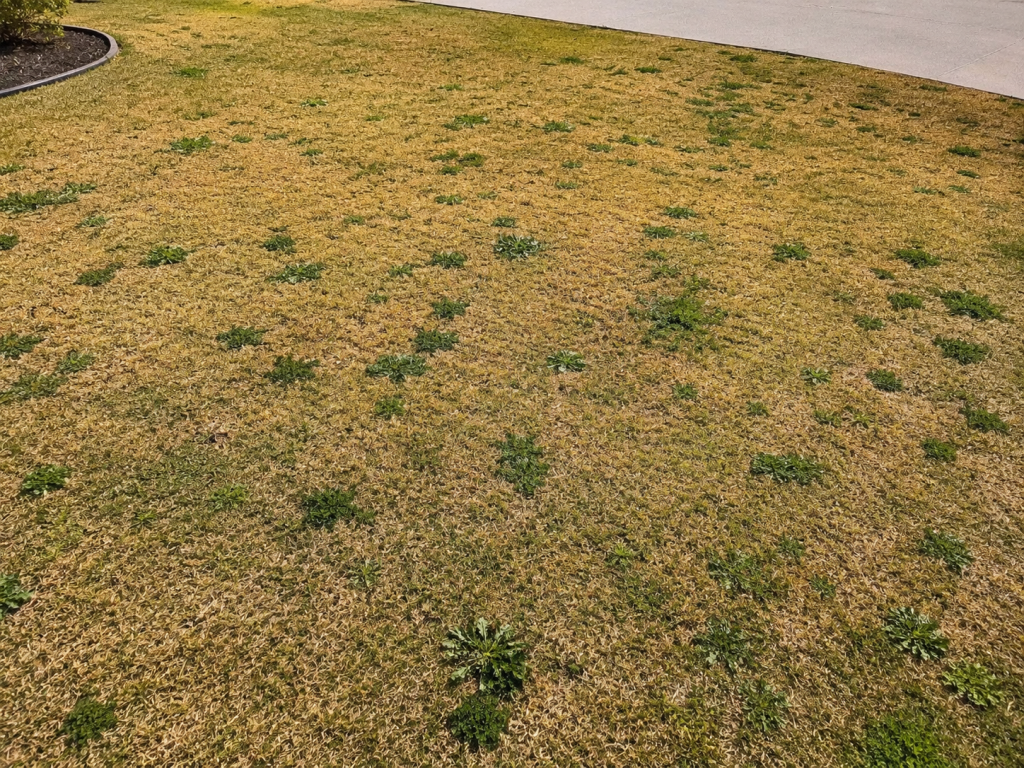
Dry spots and areas that won’t green up no matter how much you water. A common Perth problem with several possible causes — accurate diagnosis matters before you treat.
Areas that feel dry just below the surface even after irrigation.
Distinct edges or spreading areas
Patches that grow over weeks rather than appearing overnight.
Water pooling or running off
Often a sign of hydrophobic soil underneath the patch.
Perth-specific
Why It Happens in Perth
In Perth’s sandy soils, the most common cause of brown patches is hydrophobic (water-repellent) soil rather than under-watering — water beads and runs off instead of soaking into the root zone. Other causes include pests, fungal disease, pet damage and compaction, which is why a proper diagnosis is worth doing before spending on products.
Perth treatment guide
How to Treat It
Read the label. Always follow current product label directions before applying any pesticide or chemical — rates and safety intervals vary by product. We apply all products per APVMA label requirements.
1
Check for water repellence
Pour water on a dry patch — if it beads or runs off, the soil is hydrophobic and a wetting agent is the first step.
2
Rule out pests
Check for grubs or larvae below the surface, and watch for birds feeding at dusk.
3
Treat the actual cause
A wetting agent, a pest treatment, or aeration — depending on what the diagnosis finds.
Not sure which product or how severe it is? The Lawn Clinic ($99) confirms it before you spend money on the wrong treatment.
Post-treatment recovery
Recovering Your Lawn
Most patches recover over several weeks once the underlying cause is corrected and the lawn is watered deeply on your roster days. If a patch keeps returning, there is usually a secondary issue worth diagnosing.
Not sure it’s brown & dead patches perth?
Confirm it — book a Lawn Clinic
Several lawn problems look alike. Getting the diagnosis wrong means treating the wrong thing and wasting money on products that won’t work.
In sandy Perth soils the water often runs off rather than soaking in (hydrophobic soil). A wetting agent is usually the first fix — but confirm the cause before treating.
Not necessarily. Many “dead” patches are dormant or water-starved and recover once the soil holds water again.
We use privacy-friendly, first-party analytics to improve the site. No third-party trackers. Okay to measure your visit anonymously?